Key Takeaways
Buying near Flamingo Marina can be a rewarding way to enjoy Guanacaste, but the best decisions begin with patient research rather than excitement alone.
- Compare nearby communities, property types, access, and long-term livability.
- Build a budget that includes closing costs, taxes, insurance, maintenance, and management.
- Confirm whether the property has fee-simple title or is subject to a concession.
- Use an independent Costa Rican real estate attorney for due diligence and closing.
- Treat rental income as an estimate, not a promise, and plan for remote ownership carefully.
Understand the Flamingo Marina Costa Rica area and property market
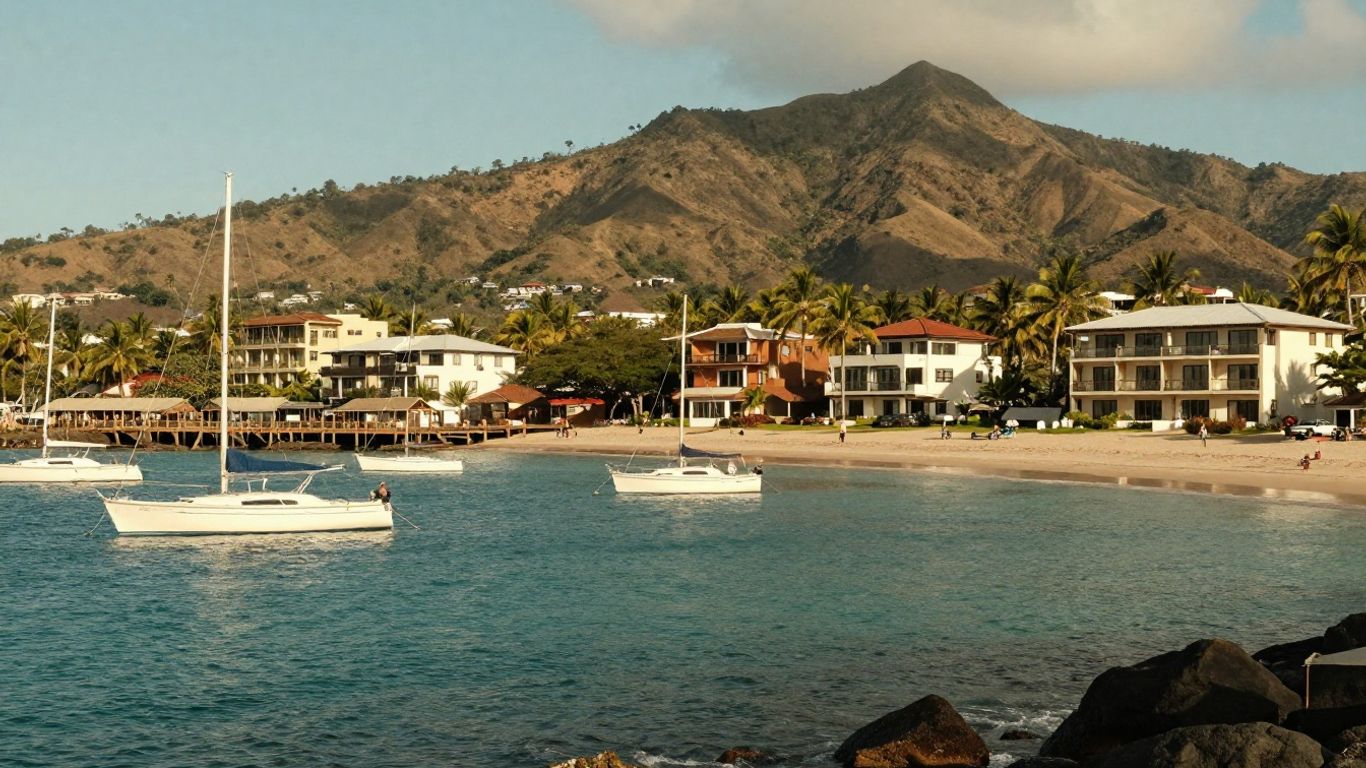
Flamingo Marina sits on Guanacaste’s Pacific coast, where a relaxed beach lifestyle meets a growing collection of residential, dining, and boating amenities. For international buyers, the appeal is not limited to a view; it is the combination of climate, accessibility, community, and the ability to spend meaningful time outdoors. If you want to buy property near Flamingo Marina Costa Rica, begin by understanding how each nearby neighborhood feels and functions throughout the year. The right location will depend on whether you value walkability, privacy, marina access, rental appeal, or a quieter local rhythm.
Communities and neighborhoods near the marina
Playa Flamingo is the most immediate reference point, with a polished coastal character and close proximity to the marina. Nearby Brasilito has a more relaxed, village-like atmosphere, while Reserva Conchal is known for its resort-oriented setting. These places are close on a map, but the experience of living in each one can differ considerably, especially in terms of road access, shops, beach character, and the amount of year-round activity.
A useful way to compare the area is to visit at different times of day. Walk the route from a prospective property to the beach or local services, observe traffic and construction, and ask residents how the neighborhood feels during both high and low seasons. The Guanacaste beach town comparison offers another perspective on the differences between Brasilito and Flamingo, which can help buyers decide whether they prefer established marina living or a quieter nearby community.
Property types available to buyers
The market includes condominiums, detached homes, residential lots, and properties within resort-style or master-planned communities. Condominiums can suit an owner who wants a lock-and-leave arrangement, shared amenities, and a simpler maintenance structure. A detached home may offer more privacy and control, but it also places more responsibility on the owner for landscaping, security, repairs, and storm preparation.
At Arcadia Residences, the documented offering includes beachfront condominiums in Playa Brasilito, with residences ranging from studios to penthouses, direct beach access, resort-style amenities, and an optional rental program. That makes it an example of how a nearby community can combine contemporary design with an easier ownership model, although every buyer should still review the specific unit, association documents, and financial terms independently.
Lifestyle, tourism, and rental demand
Guanacaste’s appeal comes from its beaches, dry tropical climate, outdoor activities, and unhurried pace. Marina access may add boating, fishing, and dining opportunities, while nearby communities can provide a more grounded connection to local life. For an investment buyer, tourism creates potential demand, but demand varies by season, property quality, pricing, access, and the quality of the management operation.
Do not base a purchase solely on a projected occupancy rate. Ask for comparable rental records, distinguish gross revenue from net income, and consider how often you expect to use the property yourself. A residence that feels wonderful for personal stays may not be the strongest rental choice, and a unit with attractive rental potential may feel less private during peak travel periods.
Accessibility, infrastructure, and future development
Study the practical journey, not just the advertised distance. Check the drive from Liberia International Airport, the condition of local roads, access during heavy rain, and the availability of groceries, healthcare, banking, and other everyday services. Utilities and internet reliability should be confirmed for the specific property rather than assumed from the broader neighborhood.
Future development can support convenience and demand, but it can also change views, traffic, noise, and construction conditions. Review zoning, approved plans, and the surrounding parcels before treating an ocean or marina outlook as permanent. The Brasilito location between major destinations is worth examining when assessing proximity to Flamingo Marina and Reserva Conchal, but proximity should be balanced against the actual condition of roads and services.
Define your goals, budget, and purchase criteria
Before touring properties, write down how you expect to use the home and how much uncertainty you can comfortably accept. A primary residence, vacation home, and rental investment each require different compromises. The asking price is only the beginning; ownership also involves legal, financial, operational, and environmental considerations. A clear brief keeps a beautiful property from distracting you from an unsuitable decision.
Choosing between a primary residence, vacation home, and investment
A full-time residence should be judged by daily convenience: access to services, reliable utilities, comfortable indoor space, security, and the quality of the surrounding community. A vacation home may place greater weight on views, beach access, amenities, and ease of arrival after a long journey. An investment property requires a separate analysis of rental rules, operating costs, seasonality, and resale liquidity.
Write a simple use statement before you begin: who will stay there, how many weeks you will occupy it, whether you will rent it, and who will make decisions when you are away. Your intended use shapes value because it determines which features matter and which costs are worth paying. Revisit that statement after each viewing rather than allowing the most visually impressive home to set the agenda.
Estimating the total cost of ownership
A responsible budget includes the purchase price, professional fees, transfer expenses, furnishings, repairs, and the cost of bringing the property into regular use. Depending on the ownership structure and transaction, closing expenses may commonly be discussed as a percentage of the purchase price, but your attorney and closing professionals should provide a current, property-specific estimate.
Create a reserve for recurring costs before making an offer. At a minimum, consider:
- Homeowners association dues and special assessments.
- Property insurance, contents coverage, and liability protection.
- Utilities, internet, cleaning, landscaping, and pool care.
- Repairs associated with humidity, salt air, storms, and normal wear.
- Local management, accounting, tax filing, and rental administration.
This list is not a substitute for a quotation. Request written figures wherever possible, and ask whether association fees include insurance, common-area maintenance, security, or reserve contributions. A lower purchase price can lose its advantage if the property requires extensive repairs or carries unusually high recurring charges.
Comparing oceanfront, marina-view, and inland properties
Oceanfront homes offer immediate visual and lifestyle appeal, but they may face greater exposure to salt air, wind, humidity, erosion, and storm conditions. A marina view can provide a strong sense of place without being directly on the shoreline, although buyers should confirm what lies between the home and the water. Inland properties may offer more space or privacy at a different price point, while still remaining close enough to enjoy the coast.
Never treat the phrase “ocean view” as a guarantee of a lasting panorama. Check the elevation, orientation, vegetation, neighboring lots, and zoning that may allow future construction. The ocean-view condo guide explains why the distinction between an ocean view and oceanfront position deserves careful attention before you compare premiums.
Planning for maintenance, insurance, and property management
Remote ownership works best when routine responsibilities are assigned before closing. Ask who will inspect the property after heavy rain, manage urgent repairs, coordinate cleaners, monitor air-conditioning systems, and document the condition between guests. You should also understand how quickly local contractors can respond and whether the building maintains preferred vendors.
Insurance deserves the same care as the purchase contract. Confirm exclusions, deductibles, wind or storm coverage, liability limits, and whether the policy applies when the property is rented. If you intend to let the home, have the manager explain guest screening, security procedures, damage claims, and reporting. A calm ownership experience usually comes from systems established in advance, not from hoping that small problems will remain small.
Navigate ownership structures and legal requirements
Costa Rica permits foreigners to own property, but the process still requires careful attention to title, land classification, and documentation. The legal description in a listing is not enough to establish what you are buying. A property near the coast may also involve maritime-zone rules, condominium regulations, easements, or restrictions that are easy to overlook when the focus is on the home itself. Obtain independent legal advice before signing a binding agreement or transferring funds.
Buying property as an individual or through a corporation
Some buyers purchase in their personal name, while others consider a Costa Rican corporation, often to organize ownership, succession, or administration. The appropriate choice depends on your tax position, financing, estate plans, intended use, and the costs of maintaining the entity. A corporation is not automatically simpler or safer, and it should never be selected merely because another buyer used one.
Discuss beneficial ownership, signing authority, annual filings, banking, and future transfer implications with qualified professionals. If more than one person will own the property, document decision-making, contributions, exit rights, and what happens if an owner dies or wants to sell. The goal is a structure that remains understandable several years after the excitement of the purchase has faded.
Verifying title, boundaries, and registered liens
Your attorney should obtain and review the official property registry information, confirm the seller’s authority, and compare the registered description with the property shown on the ground. The review should address ownership, mortgages, liens, annotations, easements, boundary questions, and any restrictions affecting use. A recent survey or cadastral review may be necessary where fences, roads, or neighboring improvements do not clearly align with the registered plan.
A title search is only one part of the investigation. Visit the property, ask questions about access and shared areas, and identify anything that appears to cross or rely on neighboring land. For a broader overview of fee-simple title, maritime-zone issues, purchase steps, and closing obligations, read this Costa Rica beachfront ownership guide alongside advice from your own attorney.
Understanding concessions, maritime zones, and restricted areas
Costa Rica’s Maritime Zone Law creates special rules for certain coastal land. The restricted zone and concession areas can involve different rights, approvals, and eligibility requirements than ordinary fee-simple property. A property described as beachfront is not automatically fee-simple, and a beautiful location does not remove the need to identify the precise legal status of the land.
Ask for a clear explanation of the property’s boundary in relation to the maritime zone, the type and duration of any concession, the public authorities involved, and the rights of foreign buyers. Confirm whether construction, renovations, rentals, or transfers require additional permissions. If the answer is vague, pause the transaction until the legal position is documented.
Working with a Costa Rican real estate attorney
Choose an attorney who represents your interests rather than relying solely on a professional recommended by the seller, agent, or developer. Before engagement, ask about experience with coastal property, condominium regimes, corporations, escrow, title searches, and bilingual communication. The attorney should explain findings in plain language and identify unresolved risks rather than simply moving paperwork forward.
Set expectations about the scope of work, fees, timing, and the documents you will receive. A careful attorney can coordinate with the surveyor, inspector, escrow provider, condominium administration, and seller’s representatives, but each professional still has a distinct role. You remain responsible for asking questions until you understand the commitments you are making.
Search for and evaluate properties near the marina
Once your legal and financial boundaries are clear, searching becomes more efficient. Use local knowledge to identify properties that genuinely fit your brief, then verify every material detail independently. Listings can be useful starting points, but photographs and descriptions may not reveal drainage, access, permitting, construction quality, or future development nearby. A slower evaluation protects the sense of ease you are hoping to create through the purchase.
Finding reputable local agents and verified listings
Look for an agent who can explain comparable sales, neighborhood differences, association rules, and the practical realities of owning from abroad. Ask how listing information is verified and whether the agent represents the seller, the buyer, or both. You should also request the legal property identifier, current association information, and a complete list of inclusions before becoming emotionally attached to a home.
Tour more than one type of property, even if you already have a favorite. Seeing a condominium, a detached house, and a neighboring community can clarify whether your priorities are truly about space, access, privacy, amenities, or ease of ownership. Keep written notes after each visit because coastal properties can blur together after several days of viewings.
Reviewing construction quality and building permits
A visual tour should include more than finishes and furniture. Look for evidence of moisture, cracking, corrosion, roof wear, drainage problems, poor ventilation, and ageing mechanical systems. Ask when the structure was built, what work has been completed, who performed it, and whether warranties or maintenance records remain available.
Have an independent inspector review the property and request evidence of required permits and approvals. For a condominium, examine both the private unit and the common elements, since roofs, elevators, pools, retaining walls, and access roads can create significant shared expenses. New construction also deserves scrutiny; modern finishes do not eliminate the need to verify workmanship and documentation.
Assessing flood, erosion, drainage, and environmental risks
Coastal beauty can conceal practical exposure. Walk the site after rain if possible, study slopes and retaining structures, and ask where water flows during intense storms. Check whether the property sits near a ravine, low point, shoreline, or drainage channel, and ask what maintenance keeps those systems functioning.
An inspector or environmental professional can help identify risks that are difficult to assess during a sunny viewing. Review shoreline conditions, vegetation removal rules, construction setbacks, and any environmental approvals that apply. The cost of understanding these issues before signing is usually modest compared with the cost of correcting an avoidable problem later.
Comparing asking prices with recent market evidence
An asking price reflects the seller’s expectation, not necessarily the property’s market value. Compare similar properties by usable area, view, condition, furnishings, amenities, parking, beach access, association fees, and legal status. A unit with a wide ocean panorama is not directly comparable to one with a partial view, even if both listings use similar language.
Ask your agent for recent evidence and challenge adjustments that are based only on broad neighborhood averages. Keep separate notes for price per square foot, renovation needs, days on market, and concessions. This gives you a more grounded position when it is time to make an offer and helps distinguish a genuinely well-priced property from one that simply photographs beautifully.
Complete due diligence and make an offer
An offer should reflect what you have learned, not merely what you hope will be true. Your attorney can help turn important assumptions into written conditions, deadlines, and remedies. Due diligence is especially valuable for international buyers because resolving a problem from another country can be slow and expensive. Preserve enough time and flexibility to investigate properly before your deposit becomes difficult to recover.
Structuring contingencies in the purchase agreement
The purchase agreement should identify the property precisely, state what is included, establish the deposit and closing timetable, and explain what happens if a material problem is found. Common areas for conditions may include satisfactory title review, survey confirmation, inspection results, financing, corporate documentation, permits, and review of condominium records. The appropriate provisions depend on the transaction and should be drafted by counsel.
Avoid relying on informal assurances about views, furnishings, repairs, rental permissions, or completion dates. If a feature affects your decision, describe it in the agreement or attach a document that defines it. Clear language gives both parties a shared reference point when circumstances change.
Conducting inspections and reviewing disclosures
Arrange inspections soon after the agreement allows access. Depending on the property, the review may cover structure, roof, plumbing, electrical systems, air conditioning, appliances, pools, drainage, retaining walls, pest activity, and moisture. A specialist may be appropriate for seawalls, elevators, solar systems, wells, or other features outside a general inspector’s scope.
Review the seller’s disclosures and compare them with the inspection findings, permits, invoices, and association minutes. Ask direct questions about previous flooding, insurance claims, repairs, disputes, and special assessments. If the answers reveal a new concern, pause and let your attorney advise on a repair, credit, price adjustment, or withdrawal.
Confirming utilities, road access, and homeowners association rules
Confirm how water, electricity, sewage, internet, and waste collection reach the property. Ask whether service is public, private, shared, or dependent on an association, and identify any backup systems. Road access should be reviewed in both legal and practical terms, including maintenance responsibilities, easements, gates, and rainy-season conditions.
For a condominium or planned community, read the declaration, bylaws, budget, house rules, insurance arrangements, meeting minutes, and reserve information. Pay particular attention to pets, rentals, renovations, parking, guests, noise, and use of common amenities. A property can be legally attractive yet unsuitable if its governing rules conflict with your plans.
Negotiating price, deposits, and closing timelines
Negotiation is stronger when it is tied to evidence. Use inspection findings, comparable sales, repair estimates, association assessments, and verified differences in location or view rather than making a low offer without explanation. The seller may respond more favorably to a clean timeline and well-defined conditions than to a small increase in price.
Confirm where the deposit will be held, who controls its release, what currency applies, and which events permit a refund or forfeiture. Closing dates should allow enough time for title work, corporate documents, lender requirements if any, and international signatures. Once terms are agreed, keep communication organized and make sure every amendment is documented.
Close the purchase and manage the property
Closing is the point where careful preparation becomes ownership, but it is not the end of the work. Funds, documents, taxes, registrations, utilities, insurance, and handover details must all line up. International buyers should build a local support network before they arrive for the final signing or before they return home. A thoughtful transition protects both the property and the experience it is meant to provide.
Understanding escrow, taxes, and closing expenses
Use a properly documented closing process and understand how funds move before sending money. Your attorney or escrow professional should explain the parties involved, account controls, payment instructions, currency conversions, and release conditions. Independently verify wiring instructions through a trusted channel because payment fraud can target real estate transactions.
Budget for transfer taxes, registration, legal fees, escrow or closing services, commissions where applicable, survey and inspection costs, and any corporation or condominium charges. Property taxes and other obligations should be allocated clearly between buyer and seller as of the closing date. Treat every estimate as provisional until it is confirmed for your specific transaction.
Coordinating title transfer and required documentation
The closing team will coordinate the deed or transfer instrument, registry filings, identification, corporate records if relevant, powers of attorney where used, and proof of payment. Names, passport details, entity information, and property identifiers should be checked carefully before signing. Small inconsistencies can create delays when documents must be corrected across borders.
Request copies of the final signed documents, registry evidence, receipts, keys, remotes, warranties, manuals, and association contacts. If the property is furnished, use a signed inventory with photographs. These records make future maintenance, insurance claims, resale, and tax reporting much easier.
Setting up utilities, insurance, and local services
After closing, transfer or establish utility accounts and confirm automatic payment arrangements where available. Arrange internet, security monitoring, cleaning, landscaping, pool service, pest control, and air-conditioning maintenance according to the property’s needs. Keep emergency contacts in one secure place and make sure a trusted local person knows how to access the home.
Insurance should be active before occupancy or guest use, with the policy reviewed after any renovation or change in rental activity. In a community such as Arcadia at Brasilito Beach, buyers should also understand how private responsibilities interact with shared amenities, security, and association administration. The exact allocation belongs in the governing documents, not in a verbal assumption.
Managing rentals, maintenance, and tax obligations remotely
Remote management calls for regular reporting and defined authority. Choose whether one person or a professional manager will handle bookings, guest communication, repairs, payments, and inspections. Set approval limits for expenses, require photographs after work, and maintain a calendar for preventative maintenance rather than responding only when something fails.
Rental income may create registration, reporting, and tax obligations in Costa Rica and possibly in your home country. Consult tax professionals familiar with both jurisdictions, especially if you own through a corporation or use the property personally for part of the year. Keep records of income, expenses, improvements, travel related to management, and days of personal use.
A property near the marina can feel effortless when the practical systems are invisible and dependable. That ease is built through realistic pricing, reliable local relationships, documented procedures, and regular review of the home’s condition. If your ownership plan is designed with those habits from the start, the coastal lifestyle has a much better chance of remaining serene.
Conclusion
Buying near Flamingo Marina is a decision about more than a coastal address: it is a choice about community, daily rhythm, legal security, and the kind of ownership experience you want from afar. Compare neighborhoods carefully, budget for the full cost of ownership, verify title and development conditions, and let independent professionals guide the transaction. With patience and a clear purpose, Guanacaste can offer an elegant connection to the Pacific without asking you to compromise on practical confidence.
Frequently Asked Questions
Can foreigners buy property near Flamingo Marina?
Foreigners can generally purchase titled property in Costa Rica, but coastal properties may involve maritime-zone rules or other restrictions. Confirm the property’s legal status and ownership structure with an independent Costa Rican attorney before signing.
Is fee-simple title the same as a concession?
No. Fee-simple title generally refers to registered ownership, while a concession grants rights under a specific legal framework and may involve different limits, terms, and eligibility requirements. The distinction should be verified in the official records.
What property types are available near Flamingo Marina?
Buyers may find condominiums, detached homes, residential lots, and residences within planned or resort-style communities. Each type has different implications for maintenance, privacy, association rules, and rental management.
Should I buy an oceanfront or marina-view property?
The answer depends on your use, budget, tolerance for coastal exposure, and preference for direct beach access or a broader outlook. Compare view permanence, erosion and storm risks, maintenance, and future development before paying a premium.
How much should I budget beyond the purchase price?
Plan for legal and closing expenses, taxes, insurance, furnishings, utilities, association dues, maintenance, repairs, and management. Obtain written estimates for the specific property rather than relying on a general percentage.
Do I need a local property manager?
A manager can be useful when you live abroad, particularly if the property is rented or requires frequent maintenance. Compare services, fees, emergency procedures, reporting standards, and authority over repairs before appointing one.
What is the first step in buying near the marina?
Start by defining your intended use, total budget, preferred property type, and acceptable legal or maintenance risks. Then visit several communities and engage an independent attorney before making a binding offer.
Updated September 2, 2026